Growing Together: Finding Calm in the Garden
When I first created what would eventually become Happy Roots Sensory Garden, I was thinking about my son, Logo.
I wanted to create a place where he could explore and simply be himself. A place where he could step away from the noise and demands of the day and reconnect with something that felt good. But somewhere along the way, I realized something important:
Happy Roots isn't just for Logo. It's for me, too.
As a mom and caregiver, it's easy to spend so much time thinking about what everyone else needs that you forget to ask yourself the same question.
What do I need right now?
Sometimes the answer is a cup of coffee or just five minutes without anyone asking me for anything.
And sometimes, it's the garden.
The Garden Is My Place to Breathe
Gardening gives me something that can be surprisingly hard to find in everyday life: a reason to slow down. When I'm outside, I can focus on the simple things in front of me. Pulling a weed (okay, a LOT of weeds). Checking on the newest blooming flower. Watering a plant. Watching the humming birds move from bloom to bloom. Picking vegetables. The garden has become a place where I can take a few minutes to reset when I'm feeling overwhelmed. I can walk the path, sit in a favorite spot, notice what's growing, or simply listen to what's happening around me.
It's not complicated self-care.
It's just being present in a place that makes me feel good.
A Sensory Garden Can Be a Caregiver's Space, Too
When we talk about sensory gardens, we often focus on what they can offer children—and especially children with sensory processing differences. But caregivers have sensory needs, too. We experience sounds, smells, textures, temperature, light, movement, and our surroundings every day. Creating a garden with those experiences in mind can give us opportunities to intentionally choose what we want to experience.
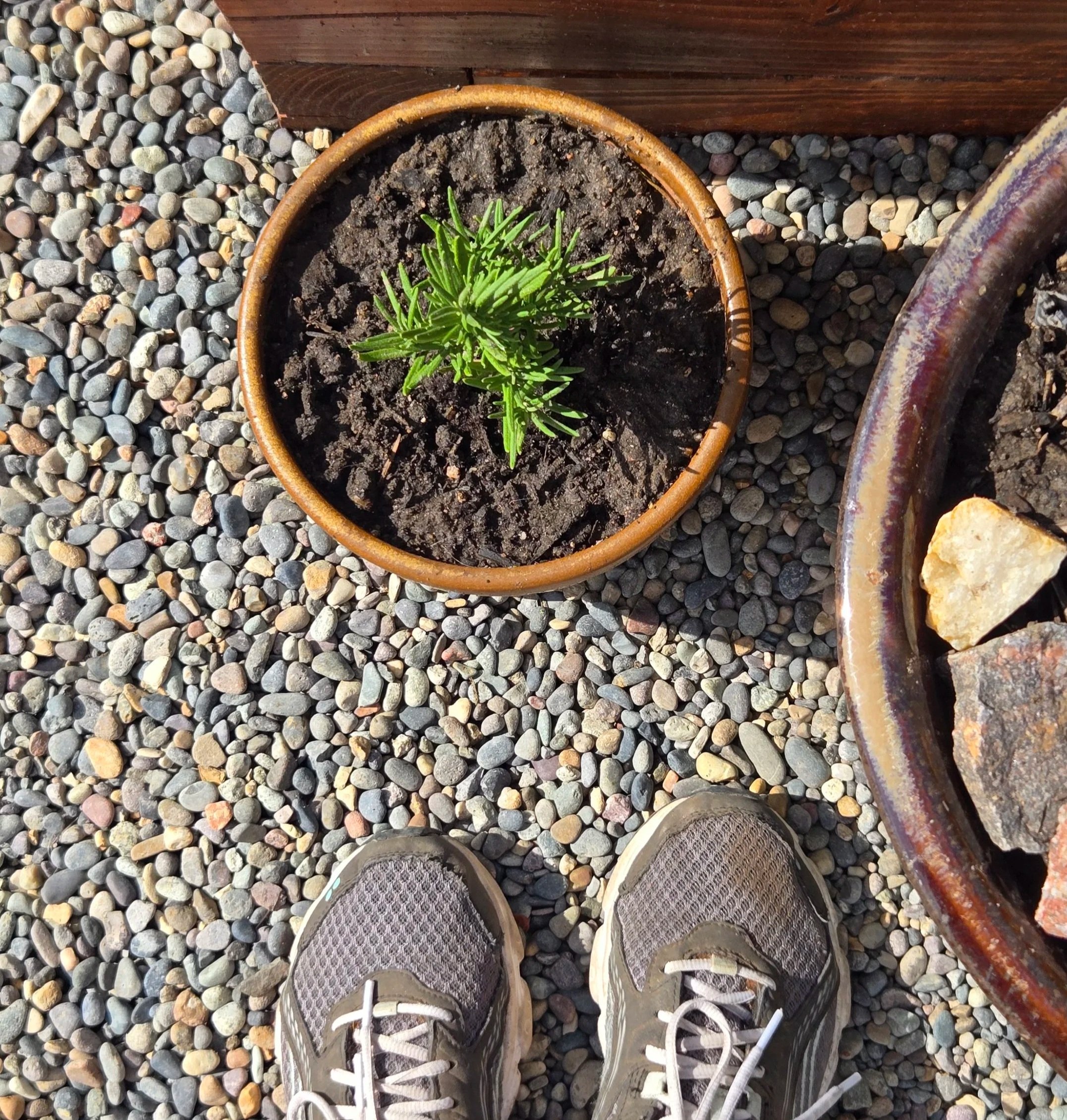
Maybe that's the smell of rosemary.
Maybe it's the sound of ornamental grasses moving in the breeze.
Maybe it's the texture of a fuzzy leaf.
Maybe it's the feeling of warm sunshine while sitting quietly on a garden bench.
Maybe it's watching butterflies move from flower to flower.
And maybe it's getting your hands dirty.
For me, those little experiences can become moments of calm.
A Place to Practice Mindfulness
I don't think of myself as someone who sits perfectly still on a meditation cushion for twenty minutes every morning. Honestly, that isn't always realistic for me. But I can walk through my garden. I can stop and look closely at a flower, take a few slow breaths while I'm watering. I can notice what I hear and pay attention to the smell of the plants around me. That's mindfulness, too. The garden gives me a natural place to practice being present without making it feel like another item on my to-do list.
And Then There's the "Practice What You Preach" Part
This might be one of the most important reasons Happy Roots is for me. I'm teaching Logo that it's okay to take a break. I'm teaching him that when things feel like too much, he can find a quiet place and I'm encouraging him to notice what helps him feel regulated. I'm showing him that we can step away, breathe, move our bodies, explore nature, or find something that brings us back to ourselves.
But I can't exactly tell him to take care of himself while I'm running around completely ignoring my own needs.
I have to practice what I preach.
If I want Logo to learn that taking a break is okay, I need to show him that I take breaks, too.
If I want him to understand that asking for space is okay, I need to give myself space.
If I want him to learn that calming down doesn't have to look the same for everyone, I need to remember that my own version of calm may look different from his.
Sometimes self-care looks like sitting quietly in the garden or digging in the dirt or even, pulling weeds while listening to music. And sometimes it looks like standing in the middle of the garden and realizing that I haven't taken a breath in a while. So I take one.
Caregivers Need a Happy Roots, Too
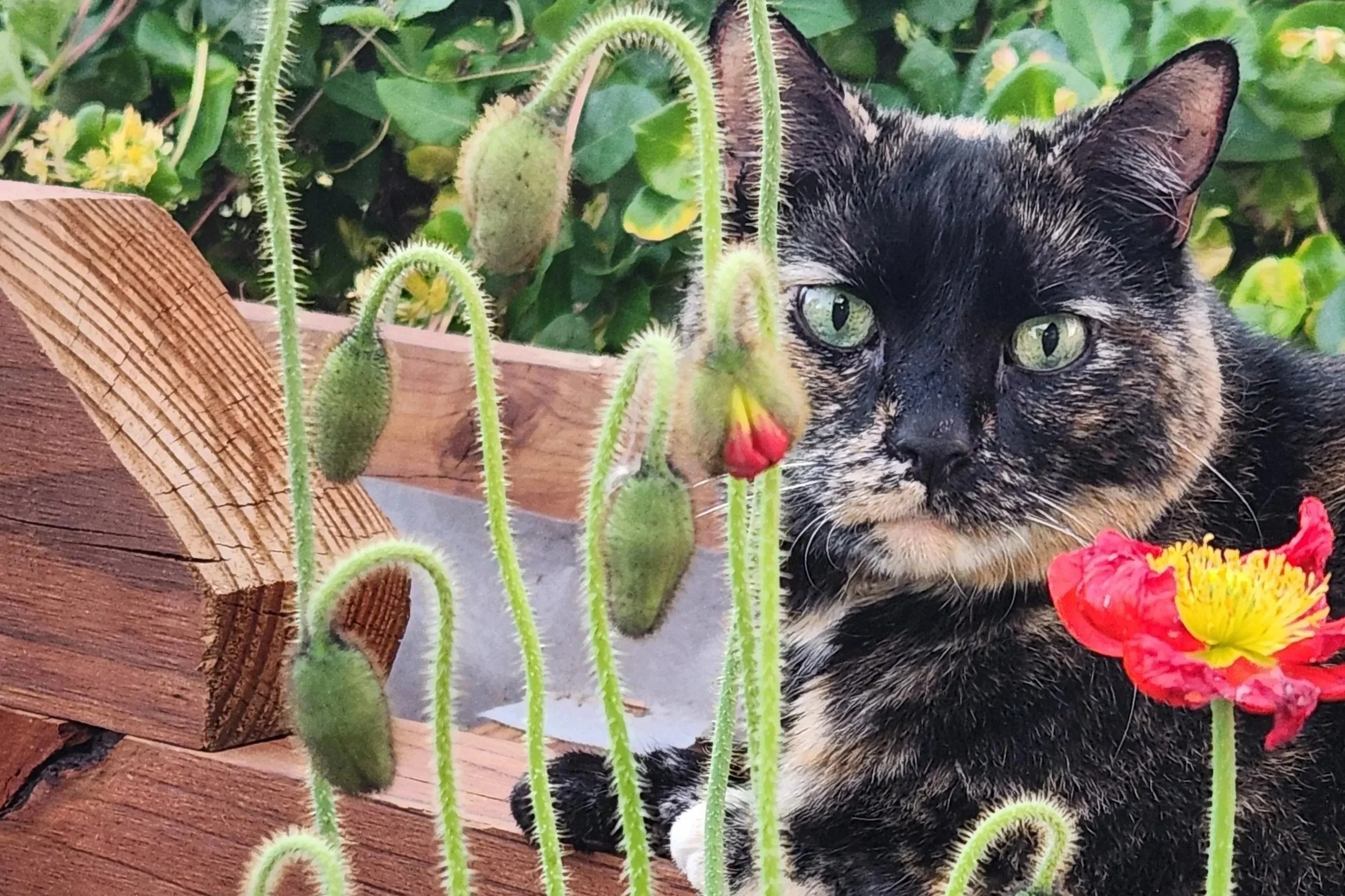
Even the cat comes out to relax in the garden.
One of the things I hope Happy Roots can demonstrate is that sensory-friendly spaces aren't just about creating the perfect environment for someone else. They're about creating spaces where everyone can find connection, comfort, curiosity, and joy. That includes the person doing the caregiving. We don't always get to choose what the day throws at us. But we can sometimes create little places that help us meet those days.
For our family, Happy Roots is one of those places. It's a garden for Logo. It's a garden for me. And it's a reminder that taking care of ourselves isn't selfish. It's part of taking care of the people we love.
So while I'm encouraging Logo to stop, breathe, explore, and find what helps him feel grounded, I'll be right there beside him doing the same thing.
Because sometimes the best way to teach our children how to care for themselves is to let them see us caring for ourselves, too.
Happy Roots isn't just where we grow plants. It's where we're learning to grow together.
Happy gardening,
Tara
Gardens & Such